
Slugs are sneaky garden pests! They are:
- Adaptable
- Feed on a wide variety of organic matter
- Seclusive… leading to be elusive.
The solution? Take an integrated pest management approach.
- Assess the damage.
- Evaluate your options.
We have a lot of tried and true ways to get rid of these slimy un welcome visitors to your garden.
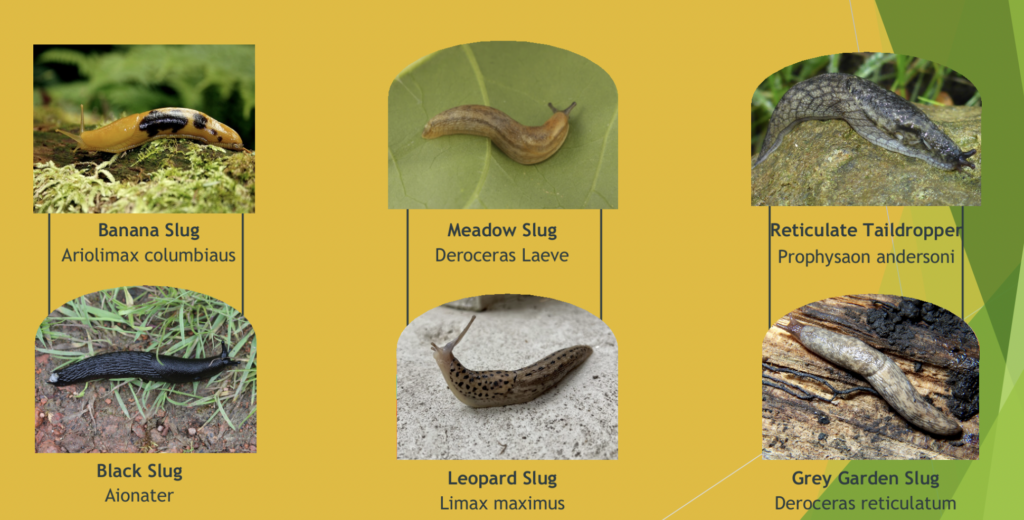
Native and Non-native Alaskan Slugs
Evidence of a slug problem
- A dried slime trail left behind
- Weak or dying plants
- Irregular shaped holes in leaves, stems, flowers and fruit
- Seedlings injured or damaged
- Check any cool, moist areas with shade and you find some
Protecting the garden
First step: Identify the Pest
Slugs are slimy, soft bodied, without legs. Generally muted natural colors, except the banana slug. Has two pairs of feelers, top are the eyes, lowers are used for smelling. Range size from ¼” in to 2” plus. Set a “Refuge trap” to monitor population. Using a flashlight, look for slugs at night.
Use the below strategies or a combination of them to rid your garden of slugs:
- Manual Control
Hand removal can be productive if a few slugs exist. Check in the early morning hours on and under leaves, under rocks and debris. Promptly place into a cup of salty or soapy water. Discard dead slugs properly, as the smell is unpleasantly fragrant. Wear gloves during removal, as slugs natural response to predation is to release a large amount of mucus. - Natural Predators
Juvenile slug predators are beetles, frogs and spiders. Mature slug predators are domestic, migratory birds and shrews. - Sanitation
Slugs are attracted to decaying matter, removing dead or half eaten plants helps to maintain proper garden sanitation. Prune lower leaves of plants to increase light exposure; divide or thin plants to improve air circulation to dry out soil; improve drainage of soil. - Garden Design
Plant in rows 12 – 18” apart, applying a barrier in between rows. Stake plants to raise plants off the soil, to reduce access. Create an inhospitable garden by switching wood chips for gravel in garden pathways. Plant perennials that like drier conditions: yarrow, wormwood, milkweed, asters, ornamental grasses, bee balm, sage, tulips or daffodils. Remove materials where slugs hide, such as containers, boards, pavers and flat stones (see the trap technique below). Consider container planting, instead of in-ground. - Watering Schedule
Water in the morning at the base of the plant. Avoid over watering. Water by hand, drip irrigation or use soaker hoses - Barriers
- Copper foil, mesh or bands react with the mucous, giving them an electrical like shock.
- Electric Slug barrier
- Raised beds made out of metal or plastic
- Make a ring of pistachio shells around plants
- Diatomaceous earth; dries out the mucous layer, but needs multiple application after watering or rain.
- Baits/Traps
- Set out beer traps; bury containers level to ground, pour beer or other fermenting liquid that is 6-7’’ deep. As slug tries to take a drink, they fall in and drown.
- Grapefruit rind, boards or wet newspaper; these will be an attractive place to hide during the day. Check in the morning and discard slugs properly.
- Sacrificial companion plants
- Topical Pesticides (store bought and homemade remedies)
Apply the commercial pesticides in the late afternoon or evening when the slugs become active. Sprinkle product around the plants that are being protected.- Iron phosphate is a stomach poison that damages the slug’s digestive system. (Sluggo)
- Ferric Sodium EDTA is less toxic than iron phosphate, quicker killing time. (Corry’s Slug & Snail Killer)
- Make your own home made slug spray: Mix 1/3 ammonia to 2/3 water, spray on the slugs that you see on your plants. The Ammonia burns their soft membranes and will kills the slugs.
- Plants slugs do not like:
Lavender, rosemary, sage, ferns and nasturtiums, mint and hyssop, garlic and chives.
Hope this helps in the wet and soggy stretches of weather Anchorage can experiences during the growing season.